
Choosing the right builder is the single most important decision in any renovation. Get it right and the whole process can be straightforward, even enjoyable. Get it wrong and you are managing problems for months.
The challenge is that most builders make the same promises. Every quote claims quality, experience, and transparent communication. So how do you actually tell them apart before signing anything?
You ask specific questions, and you pay attention to how they answer.
This guide covers 10 questions worth asking every builder you shortlist, plus a red flags section and a checklist you can take to your next builder meeting. It is written specifically for homeowners in Sydney, with NSW licensing requirements and local context throughout.
1. Are you licensed and insured?
This is the non-negotiable starting point. In NSW, any residential building work over $5,000 (including labour and materials) must be carried out by a licensed builder. No exceptions.
Before going further with any builder, verify two things.
Their contractor licence. You can check any NSW builder’s licence on the NSW Fair Trading licence check. Search by name or licence number. Confirm the licence is current, active, and covers the type of work you need. Most residential renovations require a contractor licence, not just a supervisor or trade licence.
Their Home Building Compensation Fund (HBCF) eligibility. For jobs over $20,000, NSW law requires builders to take out HBCF insurance before accepting a deposit. This protects you if the builder becomes insolvent, dies, or disappears before completing the work. You can verify HBCF coverage through iCare’s HBCF portal. For a plain-language explanation of how this protection works, see our post on the Home Building Compensation Fund.
Public liability insurance is also essential. A minimum of $5 million cover is standard for residential work. Ask for a current certificate of currency, not just a verbal confirmation.
If a builder cannot produce these documents readily, that tells you something important.
2. What is your experience with projects like mine?
A builder who specialises in heritage restorations on the Upper North Shore has a very different skill set from one who focuses on contemporary builds in the Inner West. Both might be excellent. Neither is automatically right for your project.
Ask them to walk you through two or three completed projects similar to yours in scope, style, or complexity. Specifically:
- What were the main challenges on those projects and how were they resolved?
- Were they completed within the original budget and timeline? If not, why?
- Can you speak to the clients from those projects?
If they offer a portfolio, ask which suburb each project was in. North Shore homes, particularly older properties in areas like Mosman, Cremorne, Northbridge, and Lane Cove, often have heritage overlays, sandstone foundations, or unusual structural conditions. Experience in your area matters.
A builder comfortable with your project type will answer these questions confidently and specifically. Vague generalisations are worth noting.
3. What does your contract include and exclude?
The contract is where most renovation disputes begin. Not necessarily because builders are dishonest, but because what is “obvious” to a builder and what a homeowner assumes is included are often very different things.
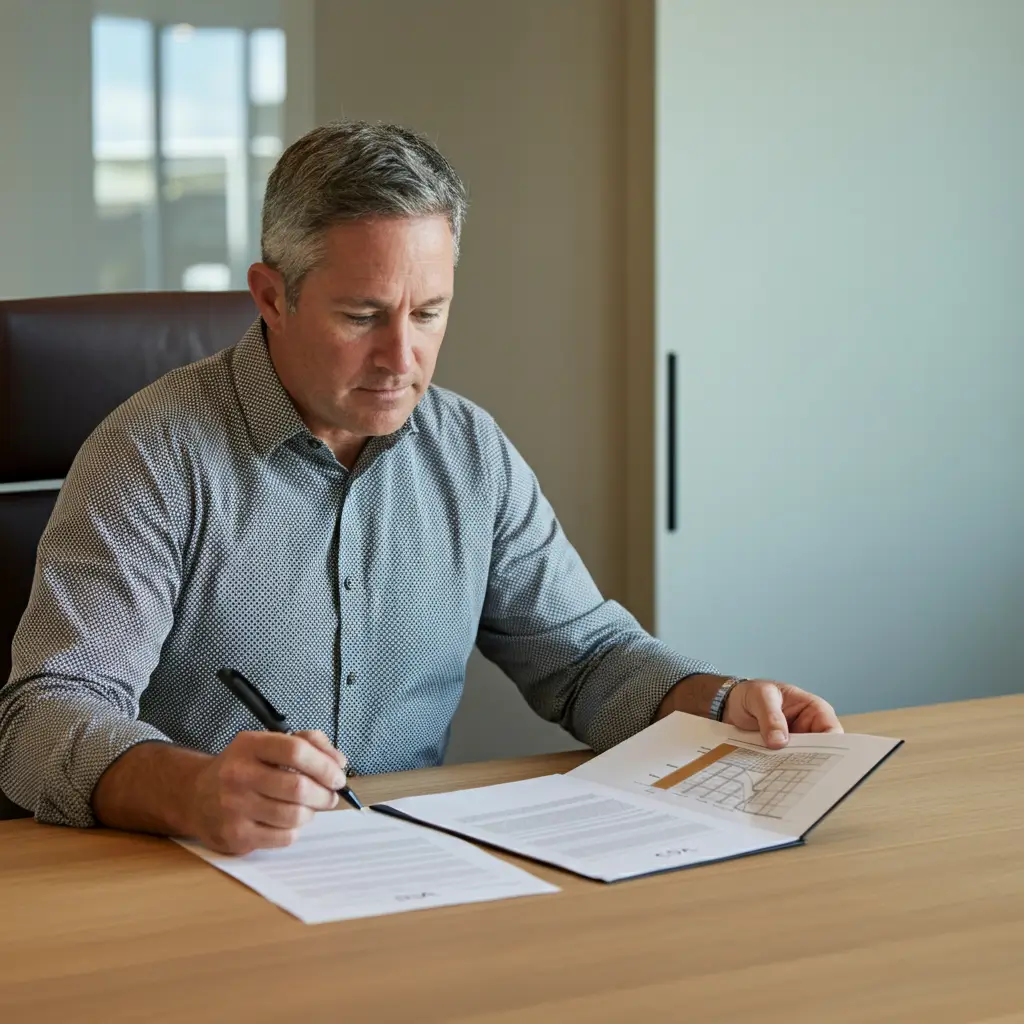
Before signing anything, ask for a full breakdown of inclusions and exclusions. Then read it carefully.
Fixed-price vs cost-plus. These are two fundamentally different contract structures. A fixed-price contract locks in your total cost upfront. A cost-plus contract charges you the actual cost of labour and materials plus a margin. Each has legitimate use cases, but the implications for your budget are significant. Read our detailed comparison of fixed-price vs cost-plus contracts before your next builder meeting.
A clear contract should specify what is and is not included:
| Typically Included | Often Excluded (check first) |
|---|---|
| All labour and trade costs | Demolition and asbestos removal |
| Structural materials | Soil testing and reports |
| Plumbing and electrical rough-in | Authority fees (council, private certifier) |
| Tiling and waterproofing | Scaffolding (on some jobs) |
| Paintwork (primer and two coats) | Landscaping and external works |
| Fixtures and fittings as specified | Provisional sum items |
| Site protection and rubbish removal | Client-supplied fixtures |
NSW law sets a 10% maximum deposit for residential building contracts. If a builder asks for more than 10% upfront, that is not just a red flag, it is illegal. Payment schedules should reflect genuine progress stages, not front-loaded payments that favour the builder.
For a full breakdown of what to look for in a building contract before you sign, see our building contract checklist.
4. How will you manage site safety and disruption?
If you are living in the home during the renovation, which is common for staged bathroom and kitchen projects, this question matters more than most people realise on the day they sign.
Dust migrates further than expected. Noise starts early. Access through the house needs to be managed carefully. A well-run site has systems for all of this from day one.
Ask your builder directly:
- How do you contain dust and debris during works? (Plastic sheeting, floor protection, and controlled demolition are all standard practice)
- What are your site hours, and how much notice do you give for early starts?
- How do you secure the site at the end of each day?
- If asbestos or hazardous materials are discovered during demolition, what is your process?
In older North Shore homes built before 1987, asbestos-containing materials are common in wall sheeting, floor tiles, and some roof materials. Discovering them mid-project is not unusual. What matters is whether your builder has a clear, compliant process for managing it.
A builder who has thought through site management will answer these questions without hesitation. Broad assurances that do not cover the specifics are worth pressing on.
5. What is your communication style and how will you keep me updated?
Poor communication is the most consistent complaint homeowners have about building projects. Not poor workmanship. Not cost blowouts. Simply not knowing what is happening.
Ask your builder directly:
- Who is my main point of contact throughout the project?
- How will you communicate day-to-day? (Phone, email, project portal)
- How often will I receive formal progress updates?
- If something comes up mid-build that affects my timeline or budget, how quickly will you tell me?
The best builders are proactive communicators. They tell you what is happening before you have to ask. They flag problems as soon as they know about them, not the day before they need a decision.
Watch for builders who describe communication as “available whenever you need” without a structured approach. That usually means reactive, not proactive. And reactive communication during a build tends to create anxiety.
Our renovation process is built around this specifically, because we know that silence from your builder is one of the most anxious parts of the whole experience.
6. What is your project timeline and how do you handle delays?
A detailed timeline with milestones is a sign of a builder who has genuinely planned your project, not one who is working it out as they go.
Ask to see an indicative schedule broken into stages: demolition, rough-in trades, waterproofing, tiling, fit-off, final inspection, handover. Ask what drives the start date, and when you can realistically expect to be back in.
Then ask the harder follow-up question: what happens when there are delays?
Delays happen on most projects. Material lead times shift. A trade runs over on a previous job. A council response takes longer than expected. A builder who says “we never have delays” is either inexperienced or not being straight with you.
The right answer sounds like: “Here is what we do when delays occur, and here is how we communicate it to you.”
Also worth asking: what is the practical impact of a delay on your specific situation? If you have a temporary kitchen scheduled out, family staying in rental accommodation, or tradespeople booked for a staged project, the downstream effects of a delay can be significant.
For a clear picture of what a well-managed bathroom renovation looks like week by week, see our post on how long a bathroom renovation takes.
7. How do you handle changes and additional costs?
This is where many renovation budgets quietly blow out. Not on the original scope, but on the variations that accumulate once work begins.
In building contracts, a variation is any change to the agreed scope. Variations can be initiated by you (you change a fitting or add a splashback) or by the builder (unforeseen conditions discovered during demolition, such as rotten framing or old plumbing that needs replacing before new work can proceed).
Ask your builder specifically:
- How are variations documented and approved? Written variation orders are standard practice. Verbal agreements are not.
- What happens if something unexpected is discovered during demolition?
- How quickly will I receive a price for a variation before work proceeds?
A good builder will not proceed with variation work until you have approved the cost in writing. If a builder tells you they will “sort it out at the end” or that they will just “look after you,” that is worth pressing on.
8. Do you have a defects warranty and post-handover support?
The handover is not the end. NSW law sets minimum statutory warranty periods for residential building work:
- 2 years for minor defects (workmanship and finishing issues)
- 6 years for major defects (structural issues, water penetration)
These are legal minimums. Ask your builder whether they offer anything beyond the statutory minimum, and what their practical process is when a defect is identified after you move back in.
Specifically:
- Who do you contact if a defect appears in the first 12 months?
- What is your typical response time for warranty call-backs?
- Do you provide a handover package with warranties, product documentation, and maintenance instructions?
A builder who handles post-handover issues without hesitation is one who stands behind their work. One who becomes difficult to reach after the final invoice is paid is a pattern worth knowing about before you sign.
9. What is your experience with council approvals and permits?
Not all renovations require council approval, but many do. Getting this wrong creates real problems when you eventually sell.
In NSW, you have two main approval pathways.
Development Application (DA). A formal approval through your local council. Required for works that exceed certain thresholds, affect heritage items, or fall outside the bounds of complying development. Slower, typically 40 to 100 days or more, but provides more flexibility for complex or larger projects.
Complying Development Certificate (CDC). A faster approval through a private certifier, available for works that meet specific pre-set standards under the State Environmental Planning Policy. Typically 10 to 20 days.
Which pathway applies depends on your zoning, whether your property has any heritage overlays, and the nature of the works. Some North Shore councils have specific local planning controls that affect this. A builder who has worked extensively in your area will know the local requirements well.
Ask your builder which approval pathway they recommend for your project and why. Ask whether they manage the approval process or whether that falls to you. And ask whether they have experience dealing with your specific council.
For a plain-language explanation of both pathways, see our post on DA vs CDC approvals.
10. Can you provide references and a breakdown of your team?
References are still the most reliable signal of how a builder actually operates in practice. Ask for two or three references from completed projects in the last 12 to 18 months, and actually call them.
When you speak to past clients, ask:
- Did the project finish within the original budget and timeframe?
- How did the builder communicate throughout the project?
- Were there any issues, and if so, how were they handled?
- Would you use them again?
That last question is the most telling. Most people will soften other criticisms but answer the final question honestly.
On the team. Ask whether they use an in-house team, subcontractors, or a mix of both. Both approaches can produce excellent results. What matters is how the builder manages quality regardless of who is physically on site. Ask who supervises the work day-to-day and how regularly the builder or project manager is physically present.
For trades that require individual licensing in NSW, including electricians, plumbers, and gas fitters, confirm that those trades hold their own licences. A builder’s licence does not cover unlicensed subcontractors.
Red Flags When Choosing a Builder
Beyond the 10 questions above, watch for these patterns.
Vague or verbal quotes. If a builder cannot produce a written, itemised quote, or asks you to trust that they will “sort it out,” that is a concern. Ambiguity in the early stages tends to get worse once work starts.
Pressure to sign quickly. A legitimate builder does not need you to sign today. If you feel pushed into a decision, ask yourself why.
An unusually low quote. A quote that is significantly lower than others usually means something is excluded, something is underpriced, or corners will be cut during the build. Our post on the real cost of cheap renovations covers how low quotes tend to play out in practice.
Cannot verify their licence. Check NSW Fair Trading yourself. Do not rely on a builder’s word alone.
No HBCF insurance for jobs over $20,000. This is a legal requirement. If they cannot provide evidence of HBCF eligibility, they cannot legally take your deposit.
Reluctant to provide references. A builder proud of their work will offer references without hesitation.
Asks for more than 10% upfront. NSW law caps deposits at 10% for residential work. This is not a negotiating point.
Poor communication before you sign. How a builder communicates during the quoting process is a reliable indicator of how they will communicate during the build. Slow responses, vague answers, and missed follow-ups at this stage are worth taking seriously.
Your Builder Interview Checklist
Use this before your next builder meeting. Print it or screenshot it.
Licensing and insurance
- Verified builder’s licence on NSW Fair Trading
- Confirmed licence type covers the work required
- Confirmed HBCF eligibility (for jobs over $20,000)
- Requested current public liability certificate of currency
Experience and references
- Reviewed portfolio of comparable completed projects
- Asked about specific challenges and how they were resolved
- Received two or three references from recent projects
- Called at least one reference
Contract and pricing
- Received a detailed written quote with full inclusions and exclusions
- Confirmed contract type (fixed-price or cost-plus)
- Confirmed deposit is 10% or less
- Reviewed payment schedule tied to progress stages
- Understood the variation process (written approval required before work proceeds)
Timeline and approvals
- Received an indicative project schedule with milestones
- Confirmed approval pathway (DA or CDC) and who manages it
- Asked how delays are handled and communicated
Communication and team
- Identified the main point of contact throughout the project
- Understood day-to-day communication method and frequency
- Confirmed who supervises work on site and how often
Post-handover
- Confirmed defects warranty period (minimum 2 and 6 years under NSW law)
- Asked about post-handover support process
- Asked about handover package (warranties, product documentation, maintenance guidance)
What to Do Next
The questions above are not about catching builders out. They are about finding the ones who have genuinely thought through how they work, because those builders answer these questions without hesitation.
If you want to go deeper on what a well-run renovation process looks like before you start talking to builders, the Renovation Blueprint covers the full journey from first brief to handover in plain language.
LikeSilk Building is a licensed builder (274849C) based on Sydney’s North Shore. We are a family-run business and our process is built around the same principles in this post: clear contracts, proactive communication, and a renovation experience designed to feel as straightforward as possible from start to finish.
Book a consultation with our team to talk through your project with no obligation.
For further reading on consumer rights and licensing requirements in NSW, NSW Fair Trading and Master Builders NSW are both reliable starting points.