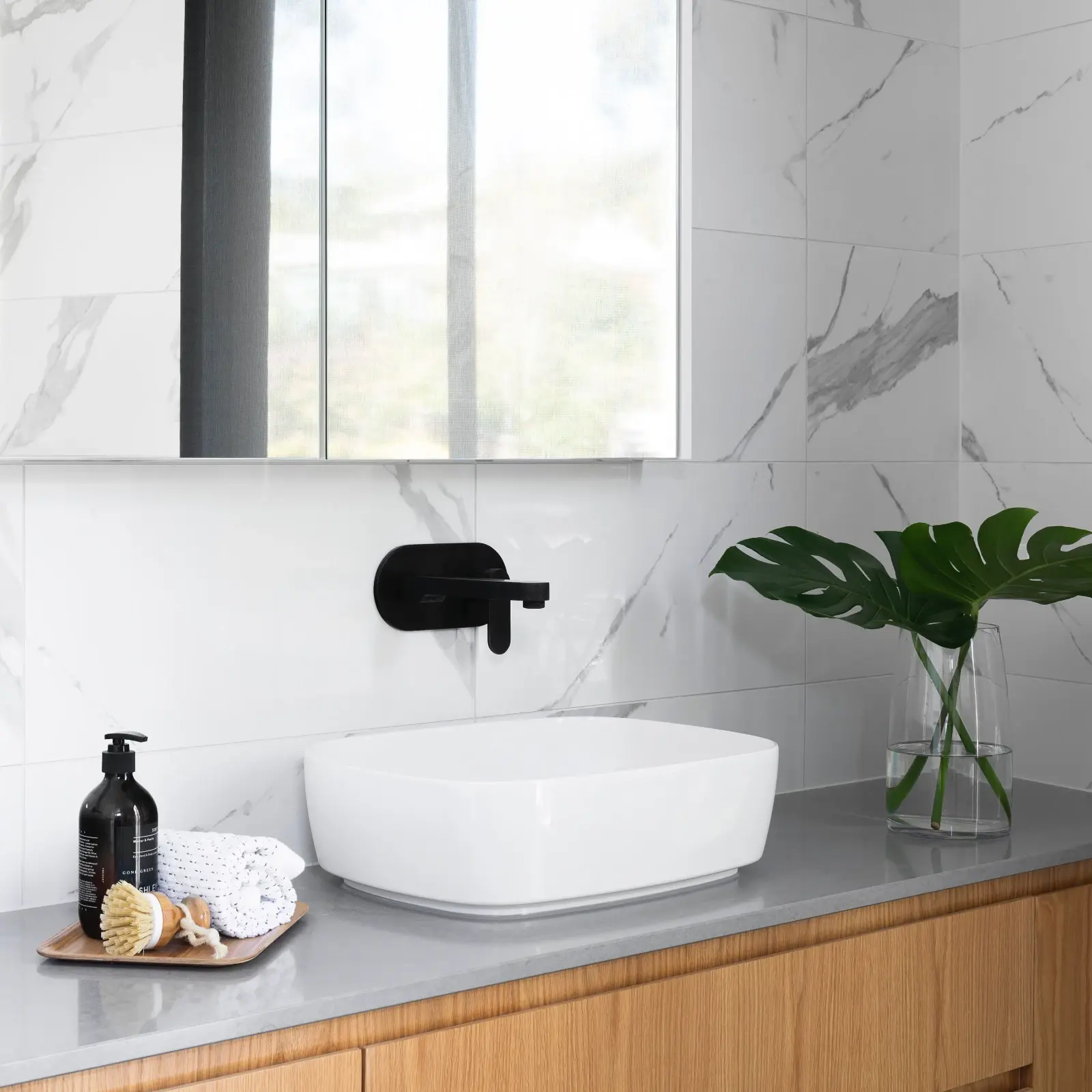
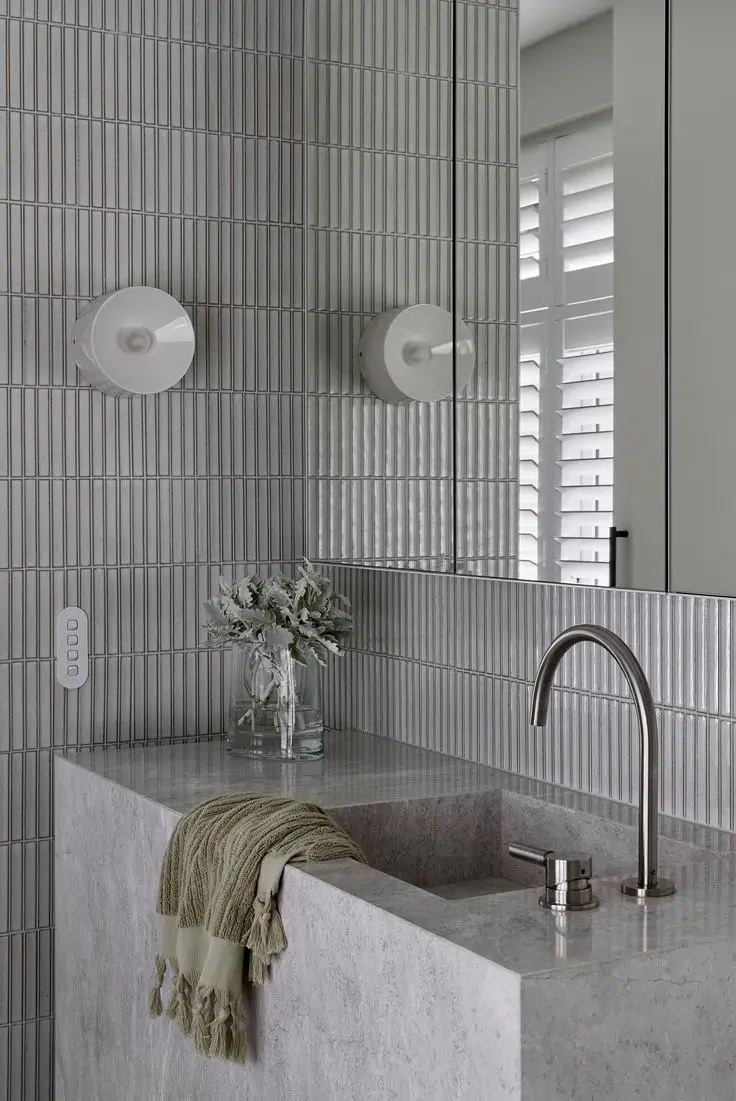
The most common question we hear from homeowners planning a bathroom renovation: how long is this actually going to take?
The construction phase, the on-site work from demolition to final clean, typically runs 3 to 4 weeks for a standard bathroom, and up to 6 weeks for larger or more complex renovations. But construction time and total project time are two different things. By the time you add design, material selection, ordering, and any approvals, most Sydney bathroom renovations take 6 to 10 weeks from first conversation to handover.
Understanding that distinction upfront saves a lot of frustration. Homeowners who plan for construction time alone often find themselves caught out waiting for tiles on backorder or a strata approval that takes longer than expected. If you’re still working out your budget, our bathroom renovation calculator gives you a realistic range in under a minute.
If you want a granular, week-by-week breakdown of what happens on site, we’ve written a separate post that covers exactly that: Bathroom Renovation Timeline: What Happens Each Week. This post is the broader picture, including the factors that affect your timeline and what you can do to keep things moving.
Average Timeline for a Sydney Bathroom Renovation
Here’s what a realistic end-to-end timeline looks like for a full bathroom renovation in Sydney:
| Phase | Typical Duration | Key Activities |
|---|---|---|
| Design and planning | 1-4 weeks | Layout decisions, builder meetings, scope sign-off |
| Material selection and ordering | 1-6 weeks | Tiles, vanity, tapware, shower screen, accessories |
| Approvals (if required) | 1-4 weeks | Strata approval, council CDC or DA |
| Construction | 3-6 weeks | Demolition through to fixture installation |
| Total | 6-10 weeks | Start to handover |
A few things worth noting. These ranges can overlap. You can be ordering materials while awaiting strata approval, for example. And the construction phase can run concurrently with some final material deliveries if scheduling is managed properly.
For renovations on Sydney’s North Shore, particularly in apartments or homes with tight access, add another one to two weeks to the scheduling phase. Trade demand is high across suburbs like Mosman, Neutral Bay, Lane Cove, Naremburn, and Willoughby, and a builder managing multiple projects needs to lock in sequencing carefully.
Bathroom Renovation Timeline Broken Down by Phase
Pre-Renovation Phase (Weeks 1-4)
This phase is easy to underestimate. Most homeowners focus on the build, but the pre-renovation phase determines how smoothly everything else runs.
What happens here: design meetings and layout decisions, site inspections to assess the existing condition of waterproofing, plumbing, and tile adhesion, scope of works finalisation, and contract sign-off. Alongside that, you’re making all your product selections. Tiles, vanity, tapware, shower screens, heated towel rails, accessories. Every item needs to be selected and ordered before demolition starts.
The reason is simple: once the old bathroom is stripped out, you can’t wait three weeks for tiles to arrive. Your trades are booked, your bathroom is a shell, and a material delay becomes a project delay.
A well-organised builder will have a selections tracker that shows you what needs to be decided and by when. If they don’t, that’s worth asking about early.
Demolition and Structural Work (Approximately 1 Week)
Demolition is usually the fastest phase. An experienced crew can strip a standard Sydney bathroom in one to two days: floor tiles, wall tiles, linings, plumbing fixtures, cabinetry, and all waste cleared from site.
What slows demolition down is what you find underneath. Water damage behind wall linings, rotted floor substrate, old sheet lead waterproofing that needs specialist removal, or live electrical runs in unexpected locations. None of these are rare. In older homes and apartments across the North Shore, they’re actually fairly common. A thorough site inspection before work begins helps identify likely issues in advance.
If the existing layout is changing and you’re moving a wall, that adds time here too. Structural changes require engineering sign-off under the National Construction Code, which affects the pre-renovation phase as well.
Plumbing, Electrical and Waterproofing (1-2 Weeks)
This is the technical heart of a bathroom renovation, and it cannot be rushed. Licensed tradespeople only: plumbing and drainage work requires a licensed plumber, and electrical work requires a licensed electrician. Both trades must certify their work on completion. NSW Fair Trading sets out the licensing requirements clearly.
The rough-in phase covers drainage positioning, pipe runs, electrical cabling, and exhaust fan ducting. If you’re keeping the existing layout, this is faster. If you’re moving the shower, toilet, or vanity, the plumbing rough-in takes longer and may require re-opening floors or ceilings in adjacent rooms.
Waterproofing follows the rough-in and is one of the most important stages in the entire project. It must be applied by a licensed waterproofer, left to cure fully between coats (typically 24 to 48 hours per coat), and then inspected before any tiling begins. Sydney’s summer humidity can slow drying times. Rushing waterproofing to hit a schedule is the kind of decision that results in water damage two years later. A good builder won’t do it.
Tiling and Flooring (1-2 Weeks)
After waterproofing is signed off, tiling begins. The time this takes depends heavily on what you’ve chosen and how complex the layout is.
A standard floor-to-ceiling tile in a 3m x 2m bathroom with a simple grid pattern: three to four days of tiling, plus grouting and sealing. Add a feature wall in a herringbone or stacked pattern, full-height large format tiles (900x1800 slabs), or a complex mosaic floor, and you’re adding another two to three days.
Curing time matters here too. Fresh tile adhesive and grout needs time before it can handle traffic. This is not something you can skip.
Fixture Installation and Finishing (Approximately 1 Week)
This is the phase that makes the bathroom look like a bathroom. Vanity installation, toilet connection, shower screen fitting, tapware, mirrors, accessories, lighting, heated towel rail, and all final plumbing and electrical connections.
It’s also the phase most sensitive to material delivery timing. If the vanity you selected is sitting in a warehouse in South Sydney, the installation sequence can proceed. If it’s still on a ship from Italy, the whole phase stalls. This is why locking in delivery dates during the pre-renovation phase matters.
The final step is a thorough quality check: waterproofing around penetrations, grout lines, silicon sealing at junctions, fixture operation, and drainage flow. At LikeSilk Building, this is a formal sign-off stage, not just a walk-through.
How Long Does a Small Bathroom Renovation Take?
Small bathrooms, powder rooms, compact ensuites, and secondary bathrooms without a bath, typically take 2 to 4 weeks for construction.
Why faster? Less tiling, simpler plumbing layouts, fewer fixtures to coordinate, and decisions that are straightforward to make. An ensuite bathroom with a 900mm shower, wall-hung vanity, and toilet is a well-understood scope. Most of the work is in sequencing the trades efficiently.
The planning phase is proportionally shorter too. Fewer materials to select, faster ordering, and if you’re in a freestanding home rather than a strata building, no approvals process to wait on.
For ideas on what’s achievable in a compact space, see our post on small bathroom renovation ideas.
What Can Speed Up Your Bathroom Renovation?
There are things genuinely within your control, and they make a real difference.
Make Design Decisions Before Work Starts
Every decision you make before demolition begins is a decision that doesn’t delay construction. Select your tiles, vanity, tapware, shower screen, accessories, and lighting during the pre-renovation phase. Place orders as soon as selections are confirmed.
This is the single biggest factor separating renovations that run to schedule from those that don’t. A builder waiting on a vanity delivery while trades are booked and sitting idle is an expensive problem that’s entirely avoidable.
Keep the Existing Plumbing Layout
Moving a toilet requires relocating a 100mm drain, potentially opening a concrete slab, and re-routing waste lines. It adds one to two weeks to the rough-in phase and increases cost significantly. If there’s no functional reason to move the layout, don’t.
The same applies to the shower and vanity. Small cosmetic improvements to layout rarely justify the time and cost of moving plumbing.
Use In-Stock Materials When Possible
Custom and imported tiles: beautiful, but they can have lead times of three to six weeks if they’re not held locally. In-stock tiles from Sydney suppliers arrive in one to two weeks. There are genuinely excellent options at both ends. Knowing which products are readily available before you fall in love with a particular Italian stone is useful.
Your builder or their selections partner should be able to tell you current lead times across the products you’re considering. If they can’t, that’s a gap in their process.
Hire a Systemised Builder
A builder who manages all trades in-house and maintains a fixed scheduling system doesn’t lose days to coordination gaps. The plumber knows when they’re needed. The tiler knows when waterproofing is due to be complete. The electrician is booked for final fit-off before fixtures arrive.
A less organised build often involves days of nothing happening between trades. That lost time adds up quickly across a four-week project.
Ensure Good Site Access
This sounds obvious, but access issues genuinely affect scheduling. Apartment renovations in buildings with restricted lift access, narrow corridors, or specific hours for trade work add buffer time to every phase. If you’re in a strata building in Neutral Bay or Naremburn, check what your building’s site access rules are before the project schedule is confirmed.
Common Bathroom Renovation Delays (And How to Avoid Them)
Delays happen. Understanding where they tend to come from helps you plan for them rather than be surprised by them.
Material and Supply Chain Delays (Adds 1-4 Weeks)
The most common delay in Sydney bathroom renovations. A product you selected in week one might have a six-week lead time. If that’s not flagged early, the project reaches installation week and stalls waiting for product.
The mitigation is simple: confirm delivery dates on all materials before demolition begins. Back-order alternatives for any long-lead items where possible.
Strata or Council Approvals (Adds 1-4 Weeks)
If you’re in an apartment, strata approval is likely required for any work affecting shared building infrastructure, waterproofing, or common property. Some strata schemes require owners corporation approval, which is only granted at committee meetings that happen monthly. The timeline is not within your control once the application is submitted.
For work that requires council involvement, a Complying Development Certificate (CDC) is typically faster than a Development Application (DA). Both paths are explained in our post on DA vs CDC approvals.
Start the approvals process as early as possible. It runs in parallel with design and selection, so it doesn’t have to add to your timeline if you start it early enough.
Unforeseen Structural Issues (Adds 1-3 Weeks)
Water damage, subfloor rot, mould behind tiles, old asbestos-containing materials (common in pre-1990 homes and apartments across the North Shore), and inadequate previous waterproofing are all issues that only become visible once demolition begins.
You can reduce the risk of surprises through a thorough pre-construction site inspection. You can’t eliminate it entirely. Budgeting a contingency of 10-15% of the construction cost covers most scenarios without derailing the project. Understanding the real cost of low-quality renovation work is worthwhile context here.
Trade Availability in Sydney (Adds 1-3 Weeks)
Good trades are busy. In Sydney’s Lower North Shore, waterproofers, tilers, and shower screen installers are in constant demand. A builder with an established trades network has this solved. A builder pricing your job without confirmed trade availability does not.
Ask your builder directly: are the trades you use your regular subcontractors, or are you sourcing new ones for each project? The answer tells you a lot about scheduling reliability.
Decision Fatigue and Change Orders (Adds 1-2 Weeks Per Change)
Changing your mind during construction is expensive in time and money. A different tile size means re-ordering, potentially waiting for new stock, and revisiting set-out drawings. Moving the vanity location mid-build means revised plumbing rough-in drawings and potentially more licensed plumber time.
The best defence is front-loading all decisions. A bathroom renovation checklist can help make sure nothing is left undecided when work begins.
Sydney-Specific Factors That Affect Your Timeline
Sydney renovations have context that a general guide doesn’t always capture.
Strata buildings. A large proportion of renovations in Neutral Bay, Cremorne, Mosman, and Lane Cove happen in apartments. Strata requirements add approval steps that freestanding home renovations don’t face. Most strata schemes require an approved plans package, insurance certificates, and a damage bond before work can start. Factor this into your planning.
Heritage conservation areas. Parts of Willoughby, Mosman, and Lane Cove include heritage conservation areas with specific council overlays. Bathroom renovations that affect the building exterior (a new exhaust vent, for example) may require council assessment. Check with your local council if you’re in a heritage zone.
Climate and drying times. Sydney’s summer humidity affects waterproofing curing times. Between coats, the membrane needs to be fully dry. In a humid January, that 24-hour window can extend to 36-48 hours. Your builder’s schedule should account for this, not assume optimal conditions year-round.
Material sourcing in Sydney. Tiles and bathroom products sourced from Sydney suppliers and stone yards in Artarmon, Alexandria, or St Peters generally arrive faster than products ordered through interior design firms sourcing from overseas. Local availability is a practical consideration when you’re weighing up material options.
Trade demand in the lower North Shore. Naremburn, Northbridge, Willoughby, and the surrounding suburbs have strong renovation activity year-round. Licensed waterproofers and quality tilers are consistently in demand. This is a reason to plan ahead, and to choose a builder who already has those relationships locked in.
Real-World Example: Bathroom Renovation Timeline
Here’s how a recent project played out. A two-bedroom apartment in Cremorne, second-floor, strata building. Standard bathroom, 2.8m x 2.2m. Keeping the existing plumbing layout, new shower over bath configuration replaced with a walk-in shower, new vanity, full tile replacement.
Week 1-2 (Pre-construction): Strata approval application lodged. Materials selected and ordered. Tiles in stock, vanity delivery confirmed for week 4. Strata approval received end of week 2 (the committee met in that window).
Week 3: Demolition. One day to strip out. Old waterproofing found to be inadequate, requiring extra substrate preparation before re-waterproofing. Half a day additional work, documented and priced before proceeding.
Week 4: Plumbing rough-in (half a day, layout unchanged). Electrical rough-in for new downlights and exhaust fan. Waterproofing first coat, second coat next day, third coat day after. Three days curing before tiling.
Week 5: Tiling. Four days for floor and walls, full-height to 2.4m. Feature niche in shower. Grouting and sealing by end of the week.
Week 6: Vanity arrived on schedule. Fixture installation, shower screen fitting, tapware, toilet reconnection, final electrical connections. Final inspection and handover by end of week 6.
Total construction time: 4 weeks. Total project time from first meeting to handover: 7.5 weeks.
The strata approval was the variable. Without it, the project would have started a week earlier and finished in 6.5 weeks. With it, the timeline came in right at the expected range.
Tips for Managing Your Bathroom Renovation Timeline
Knowing the phases is useful. Actively managing them is better.
-
Create a project calendar with your builder. Not a vague timeline, but an actual week-by-week schedule that shows when each trade is on site, when materials need to be on site, and when decisions need to be made. A good builder should provide this before work starts.
-
Make decisions early, not when you’re asked. Don’t wait until the builder calls to ask which tapware you want. Have it decided and ordered before demolition begins.
-
Communicate proactively. If you’re going to be away during a key decision week, tell your builder at the start. If a product delivery date slips, your builder needs to know immediately to adjust scheduling.
-
Budget for contingency time. A one-to-two-week buffer built into your expectations absorbs most unforeseen issues without causing stress. If you’re planning around a hard deadline (a family event, a rental vacancy date), tell your builder at the outset and work backwards from there.
-
Lock in trades early. When you’re in the process of getting quotes and choosing a builder, ask specifically when they can start and whether their trades are already confirmed. A builder who can’t confirm trade availability hasn’t committed to your project yet.
-
Check material delivery dates, not just the order confirmation. Confirmation that an order has been placed is not the same as a confirmed delivery date. Ask for delivery ETAs specifically, and follow up if they shift.
For a full planning tool that covers the whole renovation, our Renovation Blueprint walks through every stage from initial budget setting to handover.
DIY vs Professional: Timeline Comparison
Cosmetic updates, repainting, swapping tapware, replacing a mirror or vanity top, can be done over a weekend or across a few evenings. That’s genuinely DIY-friendly territory.
A full bathroom renovation is different. Licensed trades are required for plumbing and electrical work under NSW law. Waterproofing must be done by a licensed waterproofer and certified. Tiling requires proper substrate preparation and waterproofing sign-off before work begins.
A homeowner attempting a full DIY bathroom renovation in Sydney, managing their own trade bookings, inspections, and sequencing, typically takes 6 to 12 weeks of elapsed time, often longer. That’s not because the work is necessarily slower: it’s because coordinating trades without an established network, waiting for inspection sign-offs without builder relationships, and managing procurement without trade accounts adds time at every step.
A professional build with an experienced builder runs 3 to 6 weeks on site. The planning and approvals phase is the same either way. The difference is the construction phase, and the quality of what you get at the end.
A full comparison of both approaches is in our DIY vs professional bathroom renovation post.
Frequently Asked Questions
How long does a bathroom renovation take in Australia?
Most bathroom renovations in Australia take 3 to 6 weeks for construction, plus 1 to 4 weeks of planning and ordering. The total project time from first meeting to handover is typically 6 to 10 weeks. Sydney timelines sit at the higher end of that range due to trade demand and the prevalence of strata buildings.
How long does a bathroom renovation take in Sydney specifically?
For a standard full bathroom renovation in Sydney, budget for 6 to 8 weeks total including planning, material lead times, and construction. Add 1 to 2 weeks if you’re in a strata apartment requiring owners corporation approval. The construction phase itself typically runs 4 to 5 weeks in Sydney’s trade market.
Can I speed up a bathroom renovation?
Yes, within limits. The factors most within your control: making all design decisions before work starts, ordering materials early, keeping the existing plumbing layout, and choosing a builder with confirmed trade availability. These actions alone can reduce a six-week project to four weeks.
What causes bathroom renovation delays?
The most common causes: materials on backorder, strata or council approvals taking longer than expected, unforeseen issues found during demolition (water damage, rotted substrate, old asbestos), and trade sequencing gaps on the builder’s side. Good planning and an experienced builder reduce all of these, but rarely eliminates them entirely.
How long does demolition take for a bathroom renovation?
Demolition of a standard Sydney bathroom typically takes one to two days. This covers stripping floor tiles, wall tiles, linings, fixtures, and clearing waste. Finding water damage or mould during demolition can extend this phase by one to two days while the affected area is assessed and remediated.
How long does bathroom tiling take?
Tiling a standard 3m x 2.5m bathroom with a floor-to-ceiling wall tile and simple grid layout takes three to four days, including grouting and sealing. Complex patterns (herringbone, stacked, mosaic inserts), large format tiles, or additional feature walls add two to three days. Curing time after grouting means the area can’t be used for 24 to 48 hours after completion.
How long does plumbing and electrical work take in a bathroom renovation?
The rough-in phase for both plumbing and electrical in a standard bathroom renovation takes two to four days, assuming the layout isn’t changing. Moving plumbing, particularly drainage, can add two to four additional days. Waterproofing follows the rough-in and requires three to five days including application, curing between coats, and final inspection.
Do I need council approval for a bathroom renovation?
Most bathroom renovations in NSW are categorised as exempt development or complying development and don’t require a DA. However, if your renovation affects a heritage-listed property, changes the building’s footprint, or includes structural alterations, council approval may be required. Strata buildings have separate requirements through the owners corporation. Our post on DA vs CDC approvals explains both pathways. For licensed builder requirements in NSW, NSW Fair Trading is the definitive source.
How long do bathroom materials take to arrive?
In-stock products from Sydney suppliers typically arrive within one to two weeks. Custom or imported tiles, bespoke vanities, and overseas tapware can take three to six weeks or longer. It’s not unusual for a specific stone tile to have an eight-week lead time. Confirming delivery dates before demolition begins is the single most important step in keeping the construction phase on track.
Can I renovate my bathroom in 2 weeks?
A full bathroom renovation including demolition, waterproofing, tiling, and fixture installation cannot be completed in two weeks without cutting corners on drying and curing times, which creates long-term waterproofing risk. A cosmetic update (new paint, tapware swap, vanity replacement without tiling) can be done in that timeframe. If a builder quotes you a full renovation in two weeks at a price that seems too low, that is worth looking into carefully. Our post on the cost of low-quality renovations has more on what to watch for.
Getting a Realistic Timeline for Your Renovation
The best way to get an accurate timeframe is with a site-specific conversation, not a generic quote. Two bathrooms of the same size can have very different timelines depending on access, strata requirements, the condition of existing waterproofing, and material choices.
LikeSilk Building is a family-run licensed builder on Sydney’s North Shore (licence 274849C). We work across Mosman, Neutral Bay, Lane Cove, Willoughby, Naremburn, and the surrounding suburbs. Our renovation process is built around keeping projects on schedule with real sequencing, confirmed trades, and transparent communication throughout.
If you want a timeline that accounts for your actual project, book a consultation and we’ll walk through it with you.
Related Reading:
- Bathroom Renovation Timeline: Week by Week
- How Much Does a Bathroom Renovation Cost in Sydney? (2026 Guide)
- Bathroom Renovation Checklist
- Bathroom Fixtures and Tapware Guide
- DA vs CDC: What You Need to Know
- DIY vs Professional Bathroom Renovation
- The High Price of Low-Cost Renovations
- Bathroom Renovations Sydney
External Resources: