
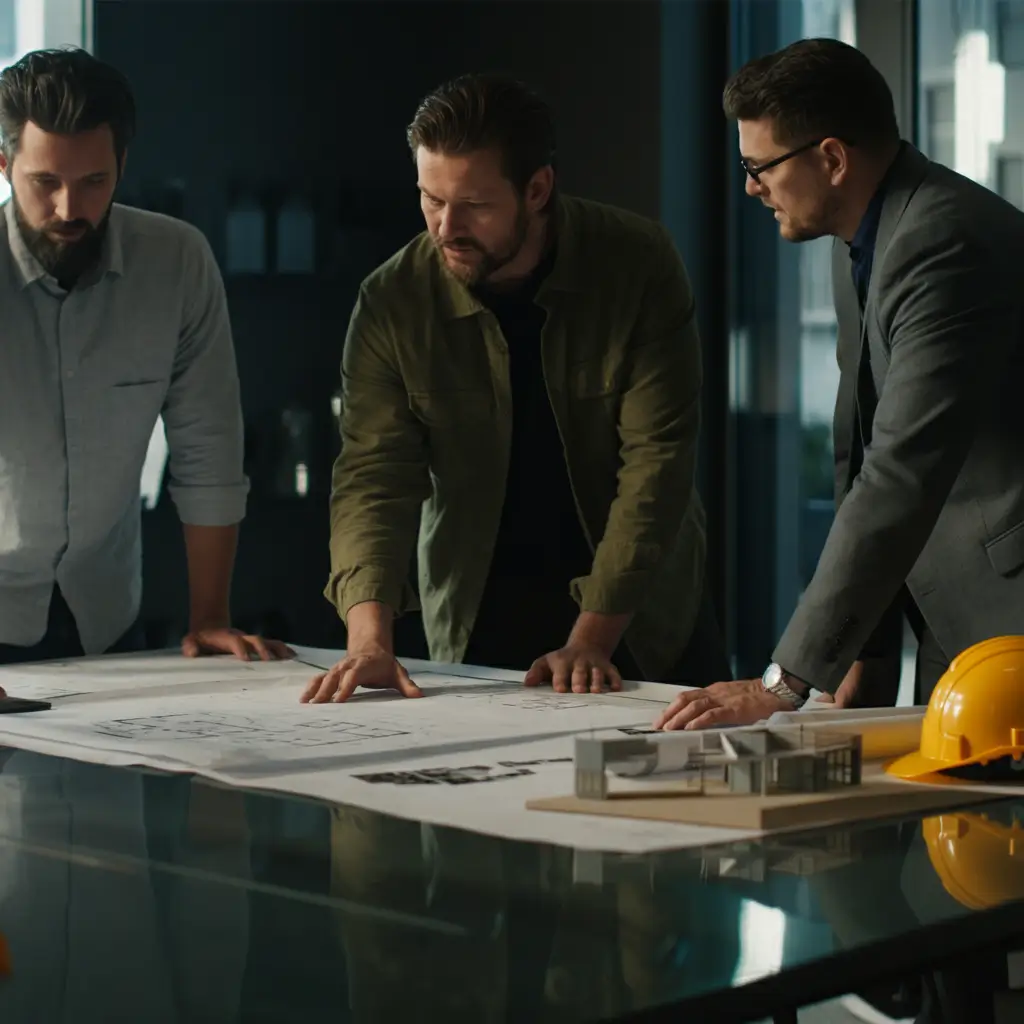
Most homeowners think the process goes like this: finalise your design, then find a builder to execute it.
It seems logical. Get the vision locked in first, then hand it over to someone to build.
But this sequence creates a problem. By the time a builder reviews your plans, you’ve spent months and thousands of dollars on design work. If anything needs to change for buildability, budget, or council compliance, you’re paying to redo it. That redesign can cost anywhere from $5,000 to $50,000 or more, depending on how far you’ve progressed.
There’s a better approach. Involving your builder early in the design phase, before plans are locked, saves money, reduces delays, and produces a result that’s far easier to actually build.
This post explains what early builder involvement looks like, why it matters, and how to decide whether it’s the right approach for your project.
What Is Early Builder Involvement?
Early builder involvement means bringing your builder into the project during the design phase, rather than after it.
Instead of finalising your plans with an architect or designer and then seeking quotes, you engage a builder as a collaborator from the start. They sit alongside your designer, review concepts as they develop, and contribute practical input on cost, buildability, and compliance before anything is locked in.
This is different from the traditional model, where the builder’s role begins at tender. In the traditional approach, a builder receives completed drawings and prices what’s in front of them. By that point, design decisions that significantly affect cost and complexity have already been made, often without any builder input at all.
Early involvement shifts the builder from executor to partner. The result is a design that has been tested against reality before construction begins.
Design and Build vs Architect First: What’s the Difference?
Understanding your options helps you choose the right approach for your project.
| Approach | How It Works | Cost Control | Timeline | Best For |
|---|---|---|---|---|
| Early builder involvement | Builder joins during design phase, before plans are locked | High: costs tested before design is finalised | Faster: fewer redesigns, tighter pre-construction | Most residential renovations and new builds |
| Architect-first (traditional) | Architect or designer completes plans, then builder is engaged at tender | Lower: budget reality check comes late | Slower: redesigns common when quotes exceed budget | Complex or highly bespoke designs |
| Design and build (single contract) | One firm handles design and construction under one contract | High: integrated from day one | Fastest: no handover gap between design and build | Streamlined projects, time-sensitive builds |
The key difference is timing. When a builder joins early, cost and feasibility are tested continuously throughout the design process. When a builder joins late, the reality check happens at tender, after the design investment is already made.
For more on why the architect-first model can create complications, see our post on choosing an architect first.
How Early Builder Involvement Saves You Money
The financial case for early involvement comes down to one principle: it is far cheaper to adjust a design on paper than to change it mid-construction, or to redo it entirely before you start.
Research from the Housing Industry Association consistently shows that projects using collaborative design and pre-construction services cost 6 to 12 percent less overall than those using the traditional sequential model. The savings come from several sources.
Preventing redesign costs. When a builder reviews your design early and flags that a particular structural approach will push you $80,000 over budget, you can adjust the design. When that same issue is discovered at tender, you either accept the cost or go back to your architect. Depending on how advanced the plans are, that redesign can cost $5,000 to $50,000 before a single piece of timber is cut.
Accurate pricing from the start. Early builder input means the design is shaped with real cost data. You are not working from designer assumptions about what things cost. You are working from actual market rates from someone who buys materials and manages trades every day.
Material and specification efficiency. Builders often know where equivalent results can be achieved at lower cost. A specific tile, a particular structural approach, a cladding choice: these decisions made collaboratively can reduce costs without compromising the outcome. Made in isolation by a designer, they can add significant expense unnecessarily.
Fewer variations during construction. Variations, meaning changes made once construction has started, are one of the biggest sources of cost blowouts. Early collaboration surfaces the decisions that would otherwise become variations and resolves them before they cost anything to change.
For a North Shore renovation in the $300,000 to $600,000 range, a 6 to 12 percent saving is $18,000 to $72,000. That number comes not from cutting corners but from better planning. Understanding contract structures matters here too. Our post on fixed-price vs cost-plus contracts explains what to watch for once you’re ready to sign.
How Early Builder Involvement Speeds Up Your Timeline
The time benefits are equally meaningful.
Projects that use pre-construction collaboration typically complete 10 to 33 percent faster than equivalent projects using the traditional sequential model. There are a few reasons for this.
Fewer redesign cycles. Every redesign adds weeks. When the design is tested for buildability and budget as it develops, you do not need to go back to the drawing board once you reach tender. The design you take to construction is one that has been tested, not one that still contains assumptions.
Council approval confidence. Builders with experience in your local area know what councils in North Shore suburbs like Mosman, Willoughby, and Ku-ring-gai expect in a submission. They know what is likely to attract conditions, what needs more detail, and what can be structured as a CDC to avoid the DA process entirely. For a clear breakdown of these options, see our post on DA vs CDC approvals.
Trade and material procurement starts earlier. When a builder is involved from the design phase, they can begin locking in trade availability and long-lead materials before the design is even finalised. On Sydney’s North Shore, where quality trades are in high demand, this makes a meaningful difference to when your project actually starts on site.
Selections made in time. Tiles, tapware, joinery, appliances: delays in selections are one of the most common causes of construction delays. A builder involved early will give you a clear selections schedule and follow it through. One who joins at tender is already playing catch-up.
What Does a Builder Actually Contribute to Design?
A common misconception is that builders are execution professionals, not design contributors. In practice, an experienced builder brings inputs that no designer can fully replicate.
Buildability assessment. Some things that work perfectly on a drawing are genuinely difficult or expensive to construct. A cantilevered element, an unusual ceiling detail, a wall removal near a load-bearing structure: a builder can identify these early and suggest alternatives that achieve the same visual outcome at a fraction of the cost or risk.
Real cost data. Architects and designers work from estimates and schedules of rates. Builders buy materials and engage trades constantly. Their pricing knowledge is current and specific to your local market.
Council and compliance knowledge. Builders understand what is achievable under CDC rules, what a DA is likely to require, and where BCA (Building Code of Australia) requirements will affect design choices. Catching a compliance issue at design stage is straightforward. Catching it mid-construction is expensive.
Material guidance. There are often multiple ways to achieve a particular aesthetic. A builder can advise on which materials perform well long-term, which are easier to source locally, and which options are genuinely equivalent versus which are substitutions that will be noticeable.
Site-specific knowledge. For properties on Sydney’s North Shore, site conditions vary significantly. Slope, soil type, access constraints, proximity to boundaries, heritage overlays: a builder who knows the area will identify these early and factor them into design decisions.
When Should You Involve Your Builder?
The answer is: before your designer starts producing detailed drawings.
The ideal timing is at the concept or schematic design stage. At this point, the direction of the project is established enough for a builder to contribute meaningfully, but nothing is locked in to the point where changes are expensive.
A practical timeline for a North Shore renovation looks like this:
- Weeks 1-2: Define your goals, priorities, and budget
- Weeks 2-4: Engage a designer or architect for initial concepts
- Weeks 3-4: Introduce your builder to review concepts and provide budget guidance
- Weeks 4-8: Collaborative design development, with builder input on each major design decision
- Weeks 8-12: Finalise design, lock selections, prepare documentation
- Weeks 12-16: Submit for approvals (CDC or DA depending on scope)
- Construction: Begins with a design that has been fully tested and costed
If you want to see how this sits within a full renovation journey, our renovation process page walks through each stage in detail.
What Happens When You Don’t Involve Your Builder Early?
The most common outcome is a tender surprise: you receive a quote that bears no resemblance to your budget.
This happens because the design was developed without ongoing cost input. Decisions that each seemed reasonable in isolation add up to a project that costs significantly more than expected. By the time the quotes come in, the design investment is done. Going back to the architect costs more, and the redesign process is demoralising.
Other common consequences of late builder involvement:
-
Structural surprises. An element of the design requires engineering that was not anticipated. The engineering costs are unexpected, and the timeline shifts while the engineer completes their assessment.
-
Council complications. A design element that would have been simple to adjust at concept stage becomes a DA condition that delays construction by weeks.
-
Selections pressure. The builder needs tile and tapware selections to order on time. The homeowner is given two weeks to make decisions that should have been made over months.
-
Variations during construction. Issues that would have been resolved in design get discovered on site. Every on-site resolution costs more than an off-site one.
None of these are catastrophic in isolation. Together, they create exactly the kind of renovation experience that most homeowners are trying to avoid.
When Is Early Builder Involvement Not the Right Fit?
Early builder involvement is not the right approach for every project.
Heritage and highly bespoke projects. If you are working with a heritage-listed property or commissioning a genuinely distinctive architectural design, the architect-first model may be more appropriate. In these cases, the architectural vision is itself the primary value, and the builder’s role is to execute it faithfully. The Australian Institute of Architects provides guidance on working with architects on complex heritage and design-led projects.
When you have an existing architect relationship. If you have worked with an architect before and trust their process, it may make sense to let that relationship lead. You can still involve a builder for a budget check at concept stage without making them part of the ongoing design team.
Very small or straightforward projects. A bathroom renovation with a clear scope and standard specifications may not benefit significantly from formal pre-construction collaboration. The design decisions are limited enough that a well-run tender process is sufficient.
For the majority of North Shore renovations, particularly kitchen and bathroom renovations and whole-home projects in the $200,000 to $800,000 range, early builder involvement consistently produces better outcomes.
How to Choose the Right Builder for Early Involvement
Not all builders offer genuine pre-construction collaboration. Some use the language without providing the substance. Here is how to assess whether a builder can deliver what they are describing.
Questions to ask:
- Do you offer a pre-construction phase, and what does it include?
- Can you provide a preliminary budget estimate from concept drawings?
- How do you communicate with the design team during the design phase?
- Are you familiar with local council requirements in this area?
- Can you provide references from clients where you were involved from design stage?
What to look for:
- A structured pre-construction process, not just a promise to “be involved”
- Willingness to provide honest budget feedback, even when it is not what you want to hear
- Clear communication about how they charge for pre-construction services
- Track record on projects similar in scope and complexity to yours
It also pays to understand your rights and the builder’s obligations before committing. NSW Fair Trading publishes clear guidance on building contracts and what homeowners can expect from licensed builders. Master Builders NSW also provides useful resources on industry standards.
For a broader checklist of what to cover before engaging anyone, see 10 questions to ask your builder before engaging with them.
How LikeSilk Building Approaches Pre-Construction
At LikeSilk Building, pre-construction collaboration is a core part of how we work.
When you engage us, you get a structured pre-construction phase that includes preliminary budgeting, design input, selections planning, and council advice before a single document is finalised. Our goal is to make sure the design you take to construction is one you can afford, one that will be approved, and one that will be built without surprises.
We are a family-run building company on Sydney’s North Shore, and most of our clients are time-poor professionals who need a project managed properly from day one. That means being honest about budget realities early, flagging design challenges before they become construction problems, and keeping the process moving forward efficiently.
You can read more about how we work with clients on our renovation process page.
The Bottom Line
If you involve your builder after the design is finalised, you lose the period when it is cheapest to make changes. Early builder involvement shifts that dynamic. Design decisions get tested against real costs and real buildability before anything is locked in.
The result is a project that starts construction aligned to your budget, approved without complications, and with trade availability and materials already locked in. That is how projects finish on time and on budget.
For a full overview of what goes into a well-planned renovation, download our Renovation Blueprint. It covers the full process from concept to completion.
Or, if you are ready to talk about your project, get in touch with our team. We are happy to walk you through what early involvement looks like for your specific scope and give you an honest view of budget and timeline from the start.
Frequently Asked Questions
Does early builder involvement cost more?
Not necessarily. Most builders who offer genuine pre-construction services will either include it in their overall contract or charge a modest fee that is credited against the build if you proceed. The cost of pre-construction is almost always less than the cost of a redesign triggered by a tender surprise.
Can I involve a builder if I’m already working with an architect?
Yes. Many architects welcome builder input at the concept and schematic design stage. The key is to introduce the builder early, before the design is too advanced to adjust cost-effectively. Our post on choosing an architect first covers how these relationships can work well together.
How does early involvement affect the design?
It does not constrain it. It shapes it. A builder’s input at design stage helps ensure the design is achievable at your budget. In practice, this often results in better outcomes because costly impracticalities are replaced with solutions that work just as well visually.
What is a pre-construction phase?
A pre-construction phase is a structured period before construction begins where the design is finalised, selections are made, council approvals are obtained, and trade procurement begins. A builder involved early will manage this phase proactively rather than reactively. The Housing Industry Association and Master Builders NSW both publish resources on pre-construction best practices.
How early is “early”?
Ideally, before detailed drawings begin. The concept or schematic design stage is the best point to introduce a builder. At this stage, the project direction is clear enough for meaningful input, but nothing is fixed to the point where changes are expensive.
What should I budget for a renovation on Sydney’s North Shore?
Costs vary significantly by scope. For detailed, current figures, see our guides on bathroom renovation costs in Sydney and kitchen renovation costs in Sydney.
For broader guidance on renovation planning in New South Wales, YourHome.gov.au provides practical resources for homeowners at every stage of the process.